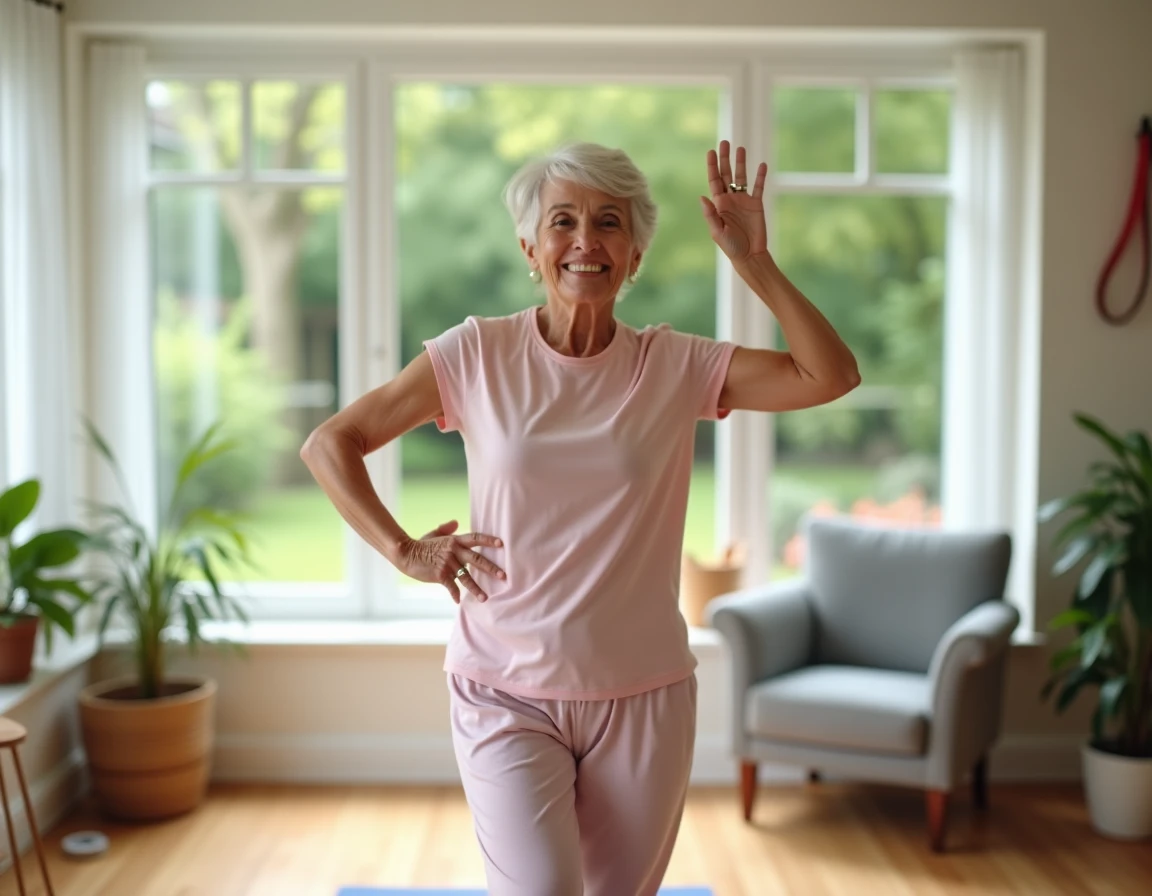
Adapted physical activity refers to a set of exercises whose intensity, duration, and movements are tailored to the functional capacities of each individual. For those over 60, practicing at home eliminates two major barriers: transportation and the apprehension of being observed. The ten activities that follow each target a specific aspect of physical fitness (balance, muscle strengthening, flexibility, cardio) and require only a small space.
1. Balance exercises inspired by the Otago protocol
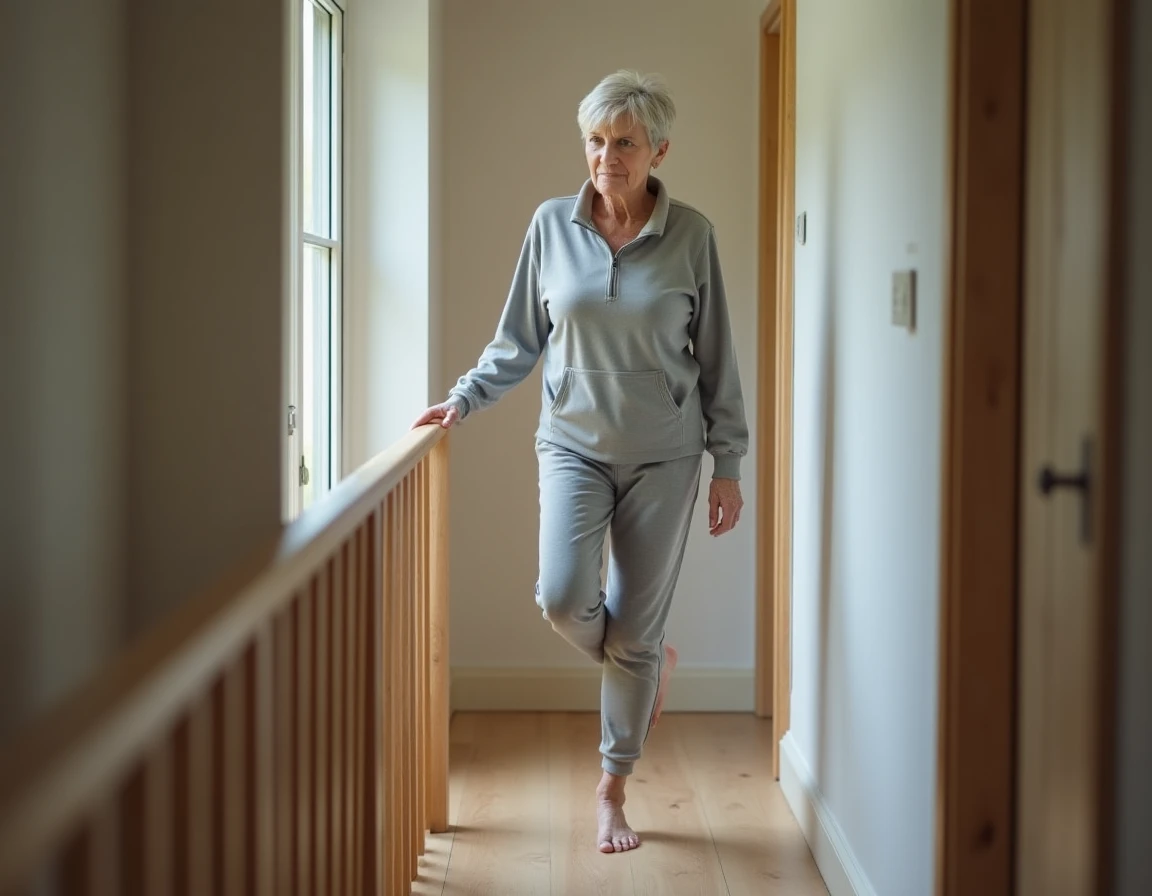
The Otago protocol combines exercises for strengthening the lower limbs and working on static and dynamic balance. Promoted by hospital geriatrics networks for several years, it directly targets the prevention of falls in those over 75.
In practice, it consists of short sequences: rising onto the balls of the feet, heel-to-toe walking along a hallway, knee bends with support from a chair. Three sessions per week are sufficient. Hospital feedback indicates a measurable decrease in falls among regular participants over six to twelve months.
Before choosing from the physical activities for seniors at home, checking for any joint contraindications with a doctor remains the first step.
2. Muscle strengthening with a chair
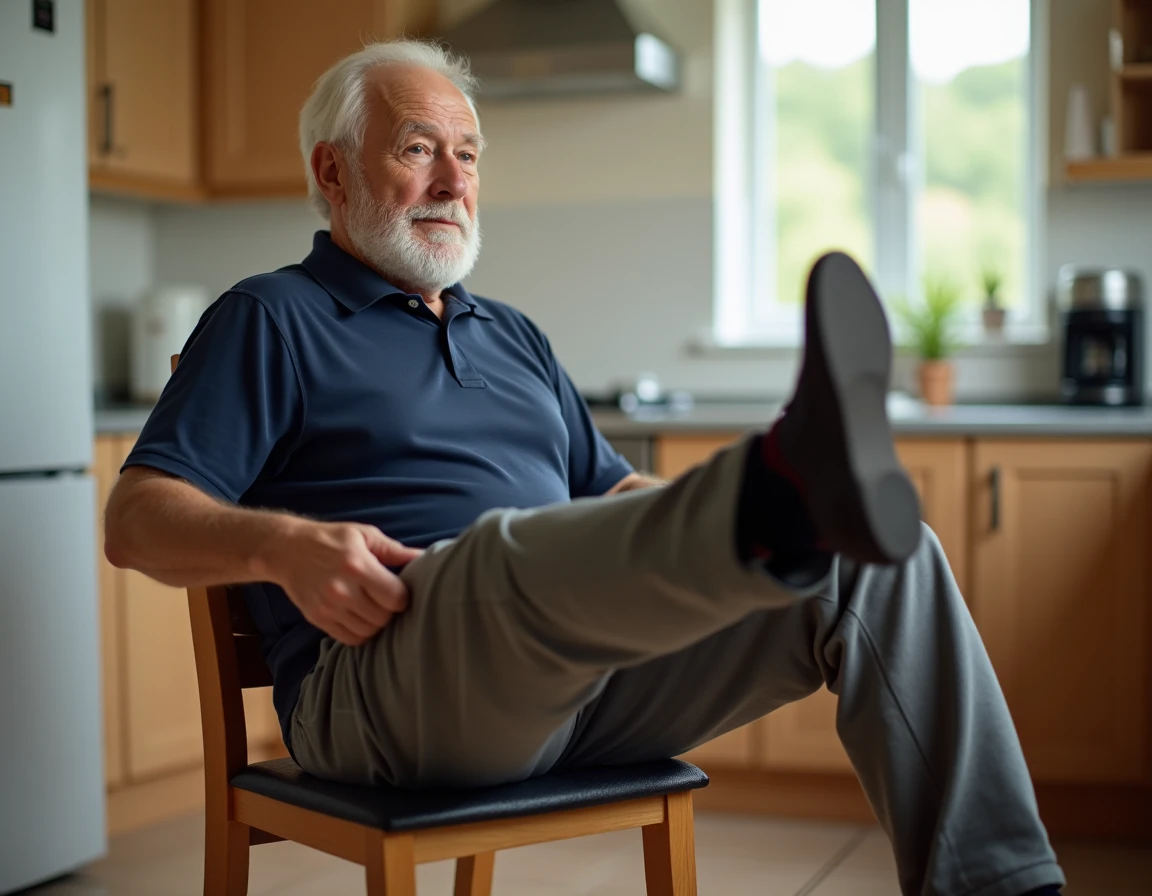
A stable chair replaces most light weight machines. Assisted squats (standing up and sitting down slowly), lateral arm raises with small water bottles, leg extensions while seated: these movements engage the major muscle groups without excessive load.
The French Society of Geriatrics and Gerontology recommends finely adapting exercises according to specific pathologies. In the case of knee osteoarthritis, for example, reducing the squat depth protects the cartilage while maintaining strengthening of the quadriceps.
3. Simplified tai chi in the living room
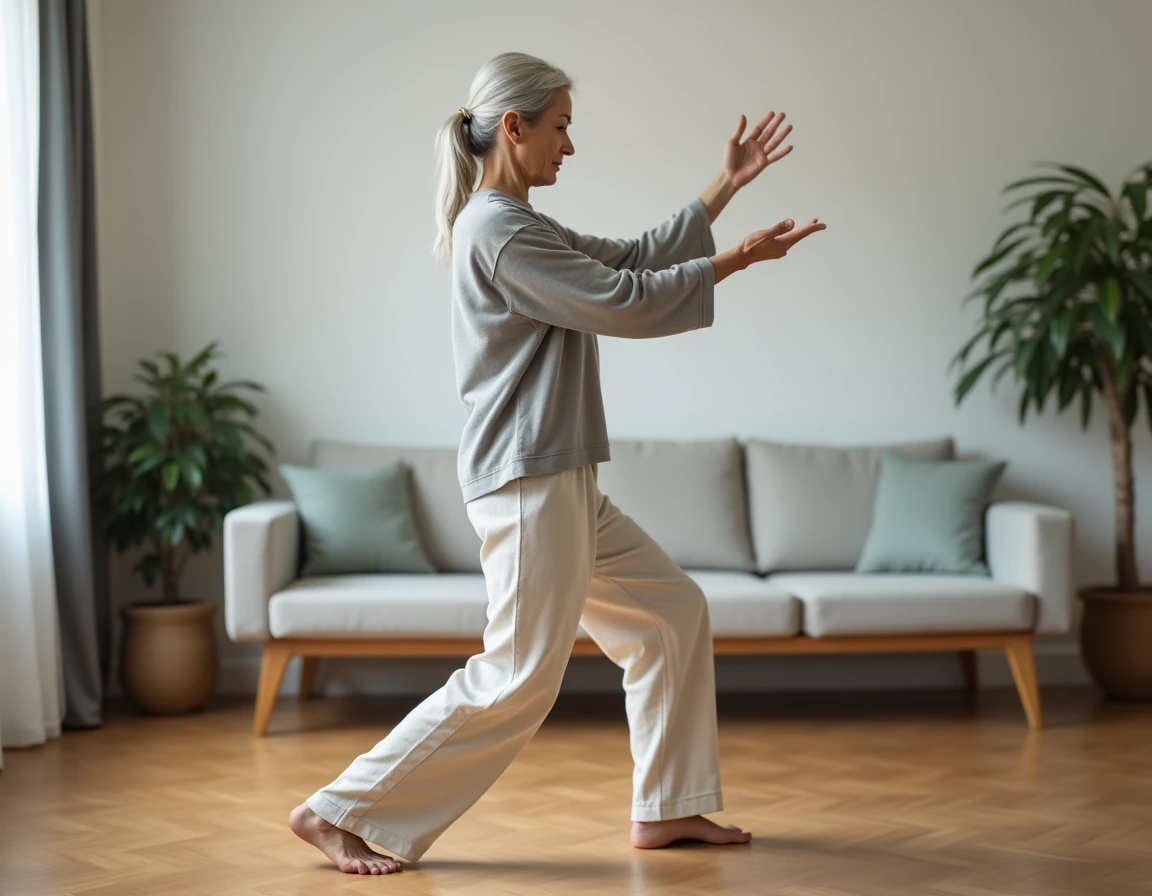
Tai chi involves slow, fluid movements that gently mobilize the entire body. Its simplified version is limited to eight or ten adaptable postures in a clear two-square-meter living room.
The main interest lies in the simultaneous work on balance, coordination, and breathing. For individuals suffering from osteoporosis, tai chi engages postural muscles under load, which the SFGG considers beneficial for bone density.
4. Gentle floor gymnastics
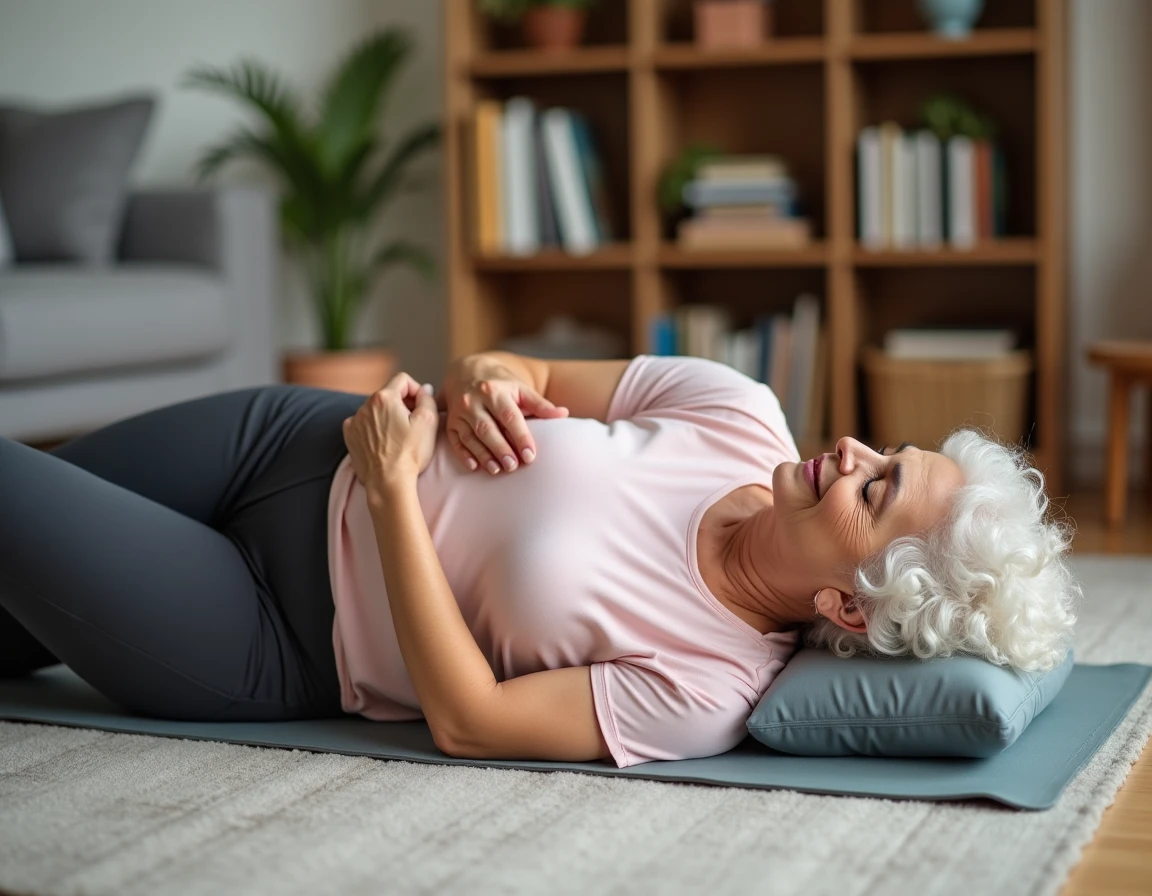
A floor mat and a few minutes are all that’s needed. Floor exercises (glute bridges, pelvic tilts, hamstring stretches) strengthen the abdominal and lumbar core without vertical strain on the joints.
This type of session is particularly suitable for individuals who experience pain when standing for long periods. Alternating phases of contraction and relaxation for about twenty minutes engages the deep trunk muscles.
5. Indoor walking and stair climbing
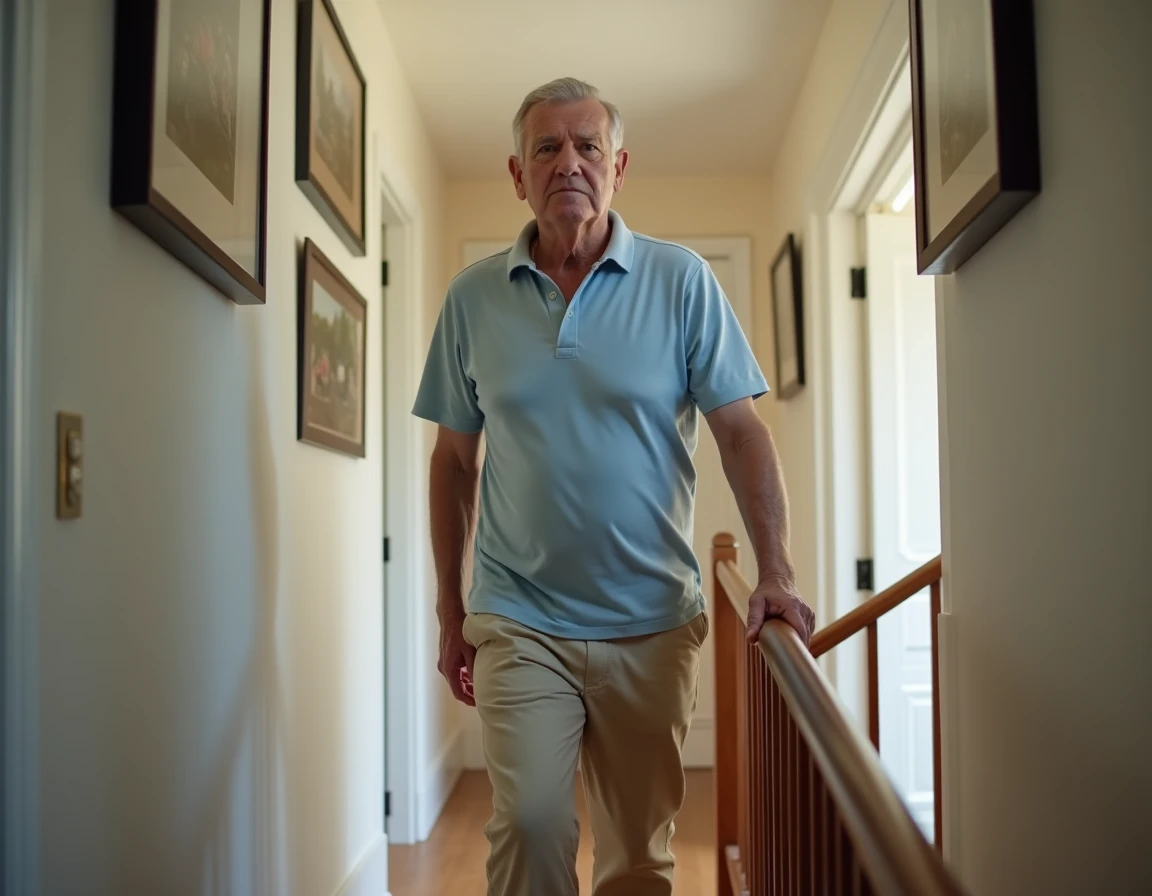
Walking briskly in a hallway or apartment constitutes an accessible cardio exercise. Adding the ascent of a few stairs increases the effort without additional equipment.
The goal is to maintain a regular cardio-respiratory activity even in bad weather or when mobility is reduced outside. Varying the speed, incorporating active breaks (knee lifts in place), and timing the sequences allows for progress week after week.
6. Chair yoga
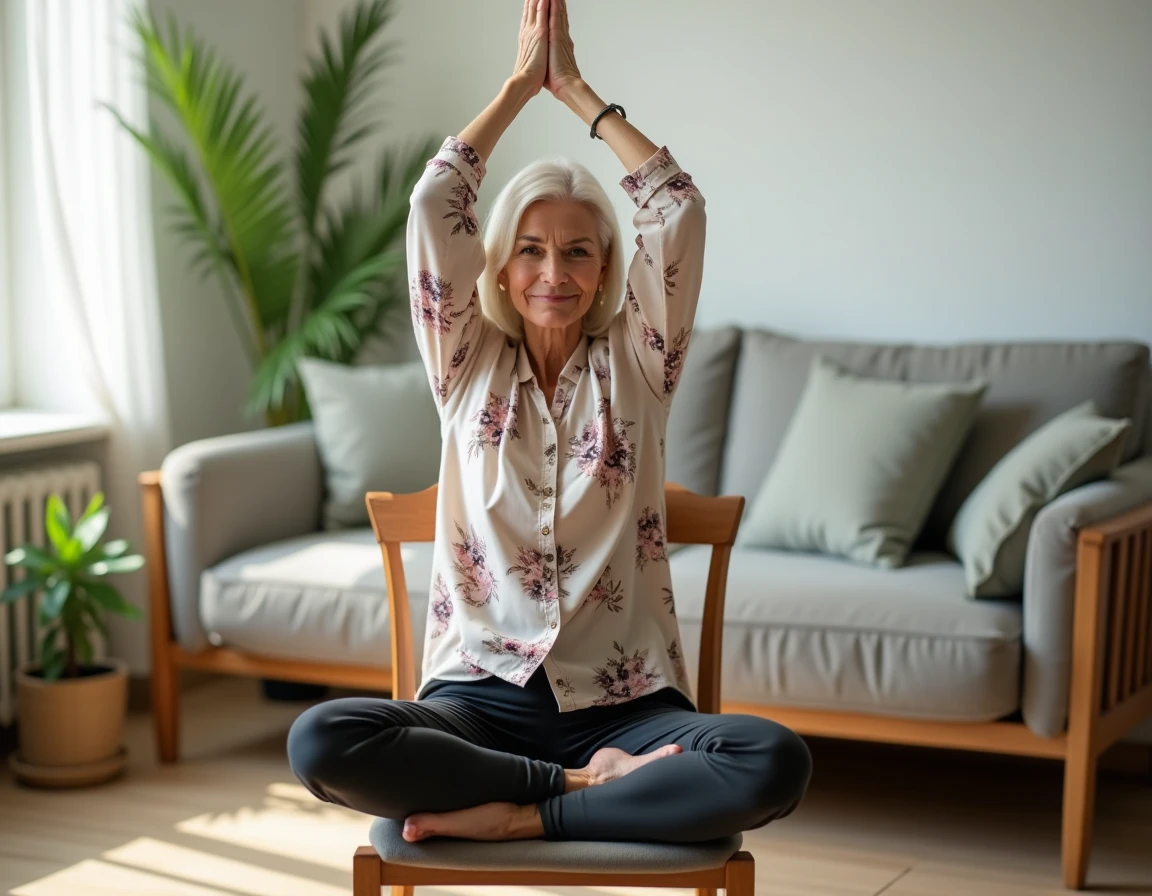
Chair yoga adapts classic postures for individuals who cannot get down to the floor. Seated twists, forward bends with hands resting on thighs, lateral stretches of the torso: each posture improves joint flexibility and respiratory capacity.
Two to three weekly sessions of fifteen minutes yield noticeable results on shoulder and spine mobility within a few weeks.
7. Targeted breathing exercises
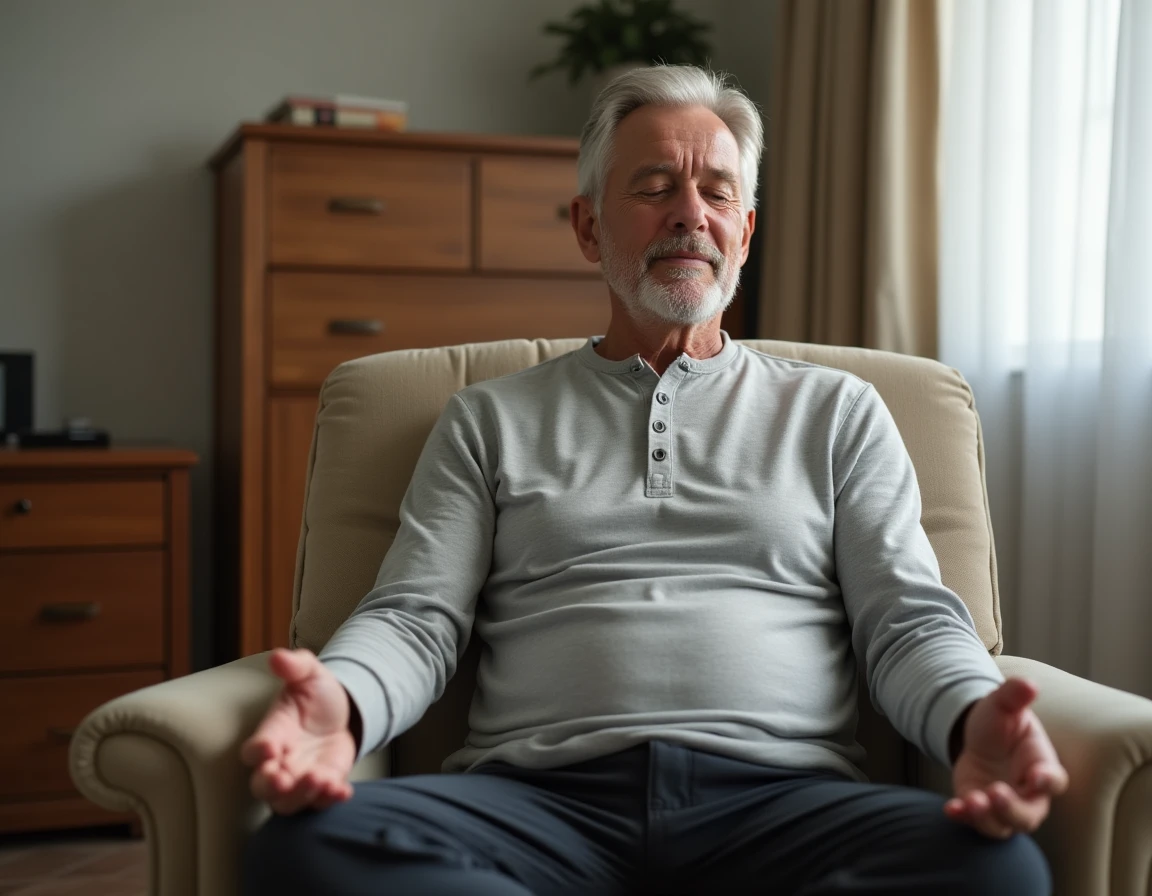
For seniors with COPD or heart failure, breathing exercises at home are part of the recent recommendations from the SFGG. Slow abdominal breathing, pursed lip exhalation, blowing through a straw submerged in a glass of water: these exercises improve ventilatory capacity without intense muscular effort.
Combined with a gentle activity like indoor walking, they form a program suitable for chronic respiratory conditions.
8. Apartment pedal exerciser
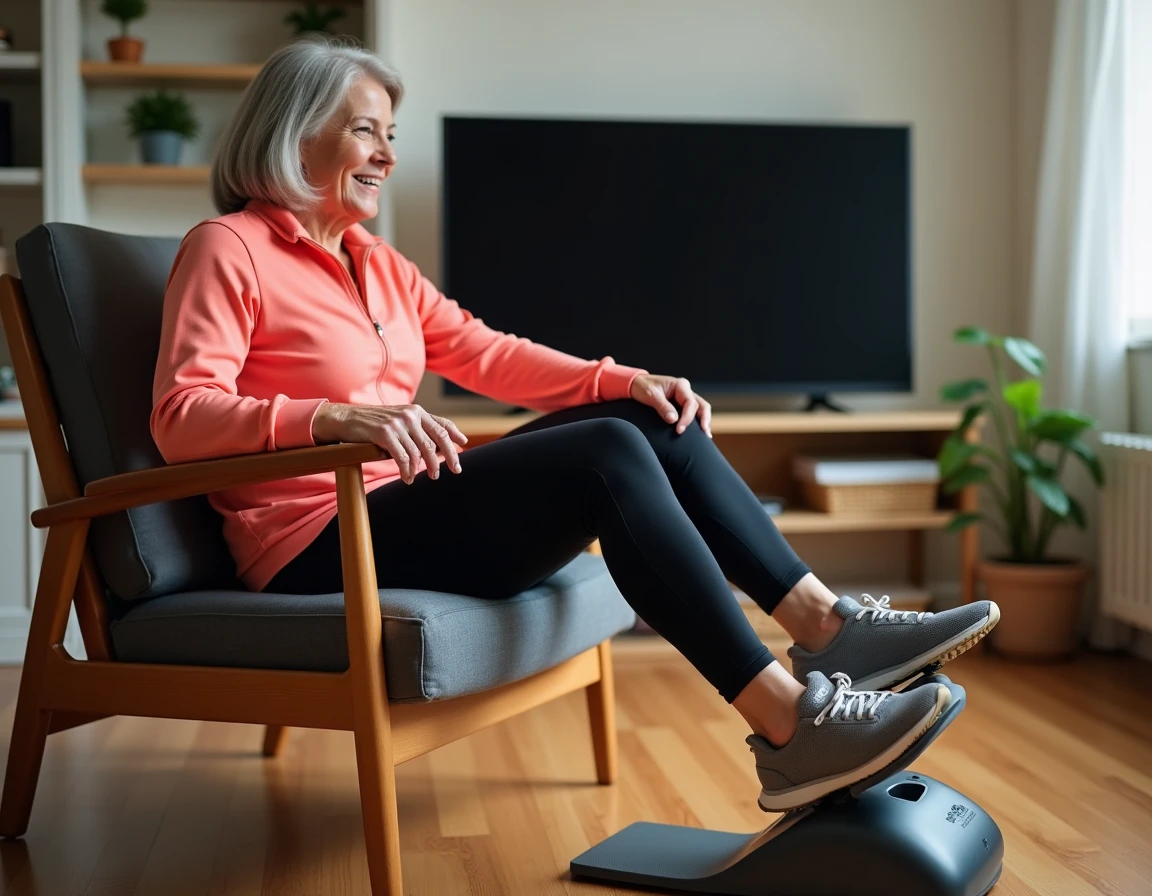
The mini pedal exerciser is placed on the floor in front of an armchair. Compact and silent, it engages the leg muscles and, when placed on a table, those of the arms. The adjustable resistance allows for intensity adaptation.
Its advantage over a traditional stationary bike lies in its minimal footprint and the ability to pedal in a comfortable seated position, which is suitable for individuals with lower back pain.
9. Motor skills course in the apartment
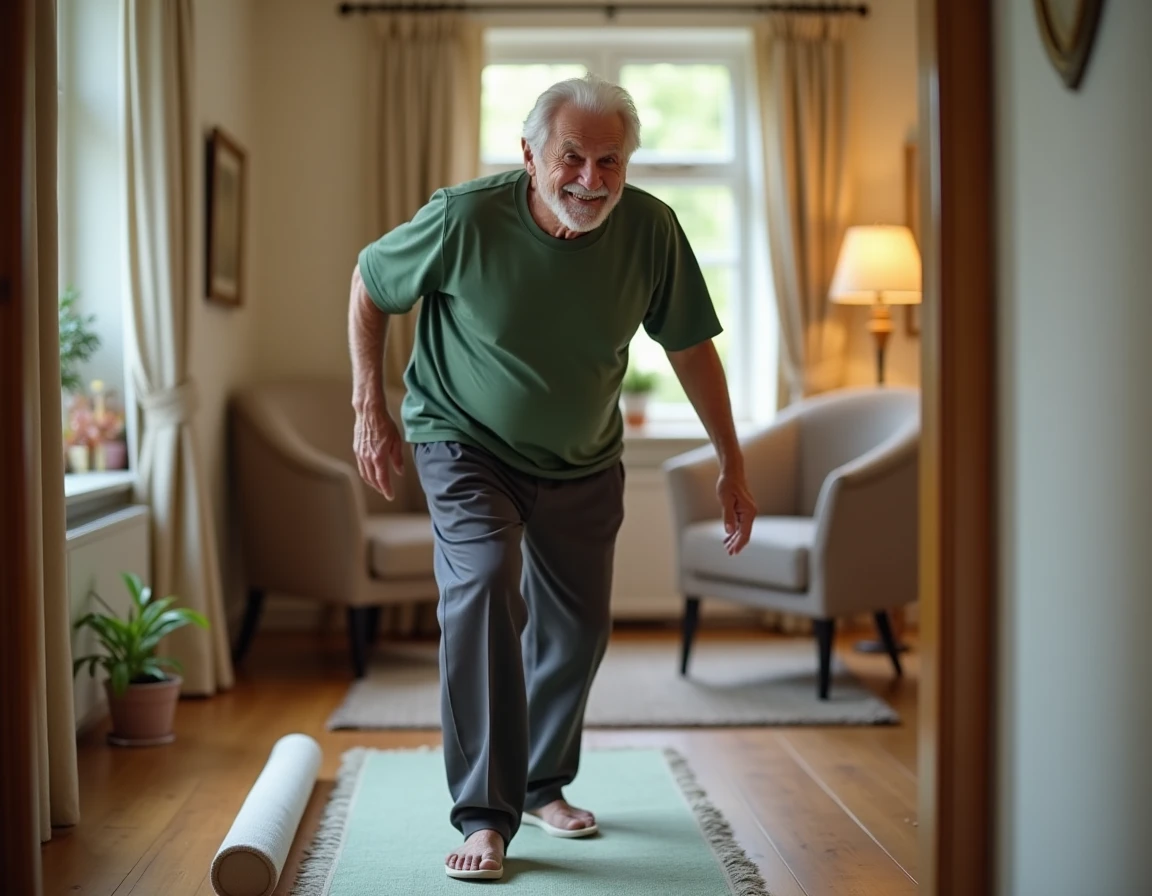
Placing cushions on the floor, navigating around chairs, stepping over a small foam obstacle: this type of motor skills course replicates everyday situations that can lead to falls (changing direction, stepping over, narrow passage).
The interest is twofold. The course works on motor coordination and postural awareness in a safe environment, while making the session more playful than a series of traditional repetitions.
10. Video sessions of adapted physical activity via videoconference
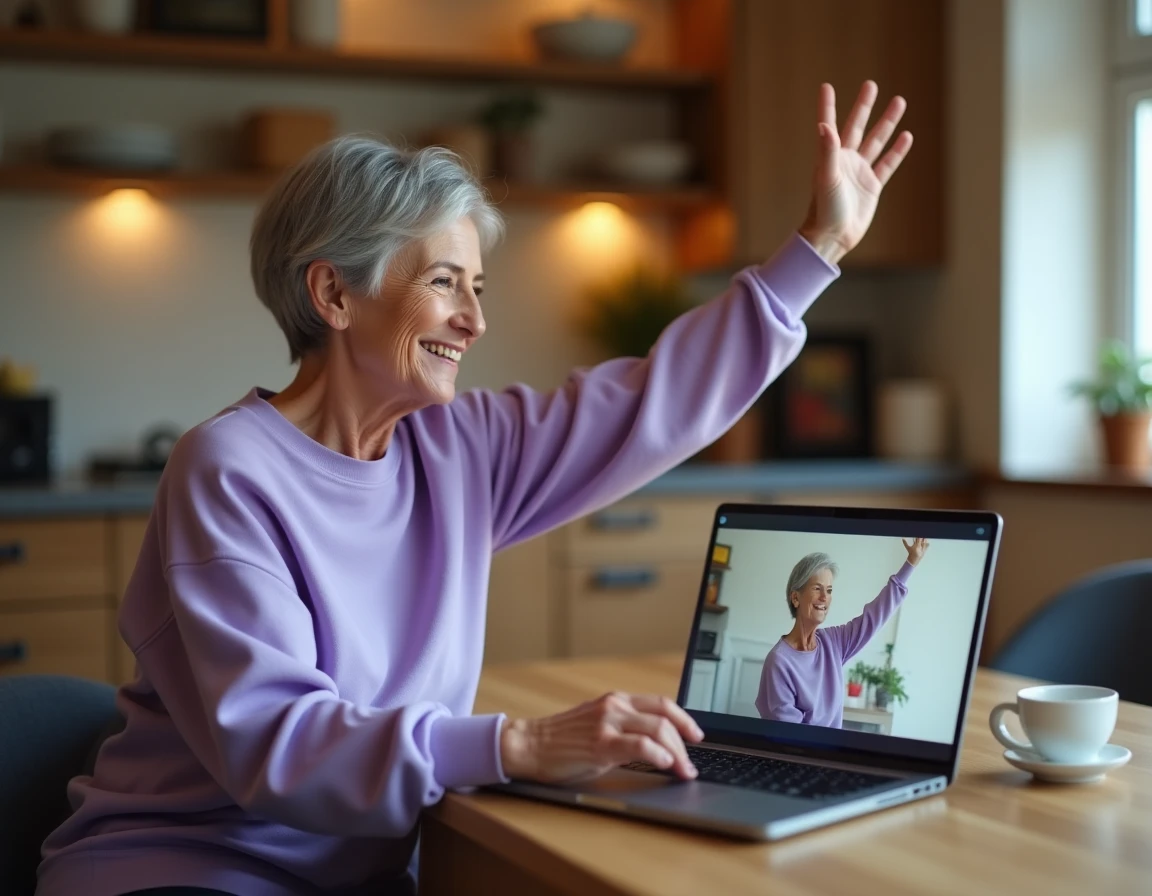
Retirement funds like CNAV and AGIRC-ARRCO offer remote prevention workshops. These collective videoconference sessions combine strengthening, balance, and stretching exercises under the supervision of a professional trained in adapted physical activity.
The live video format provides professional guidance without leaving home. The social connection created by the group serves as a factor for consistency that solitary practice does not always provide.
Each of these ten practices addresses a specific functional need. Combining them in pairs (one balance exercise and one cardio exercise, for example) in short sessions of twenty to thirty minutes remains the most realistic approach to maintaining daily autonomy, provided the program has been validated with one’s primary care physician.