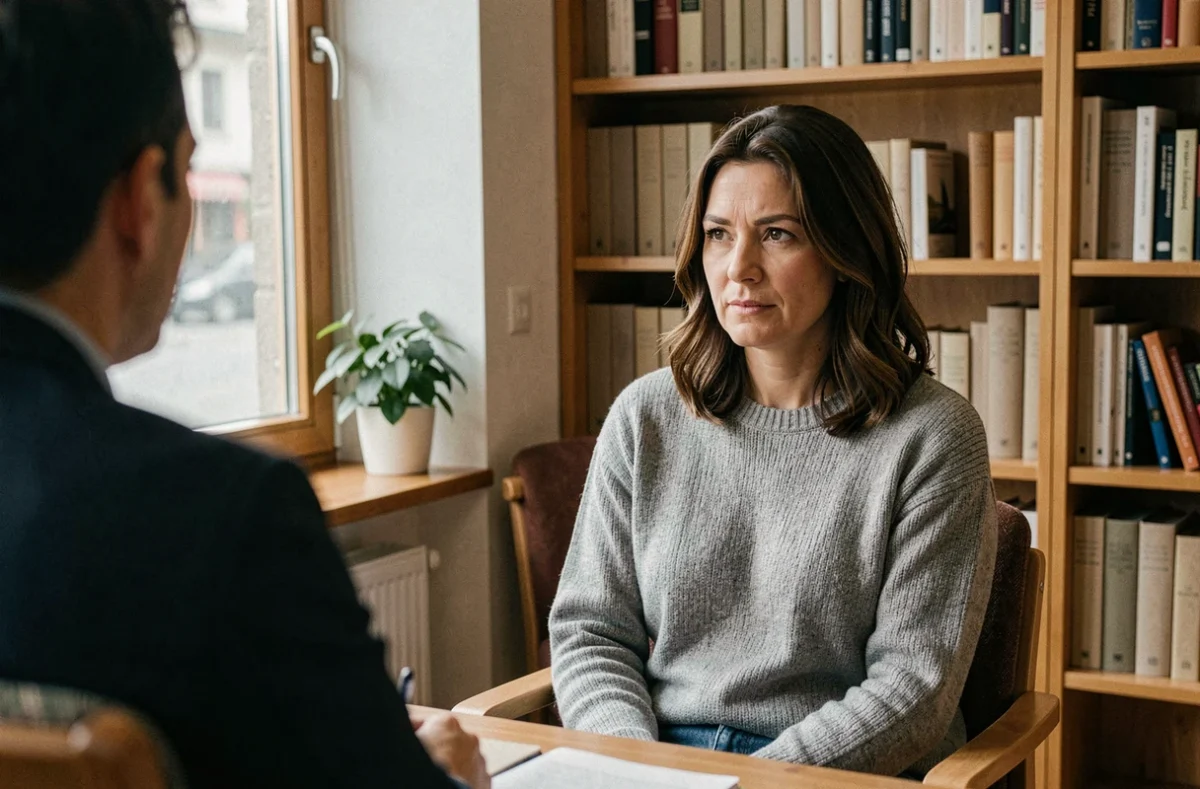
Psychological support in Switzerland relies on a structured system that can sometimes be difficult to analyze. Between psychiatrists, psychologists, and licensed psychotherapists, the modalities of care, access times, and reimbursement vary considerably. Understanding these discrepancies can save time and guide your search toward the most suitable help.
Psychiatrist, psychologist, licensed psychotherapist: what basic insurance really covers
The distinction between these three profiles directly determines what you will pay out of pocket. Since July 1, 2022, licensed psychological psychotherapists can bill mandatory insurance, but only with a medical prescription. This preliminary step conditions the entire reimbursement process.
| Professional | Direct access without prescription | Basic insurance reimbursement (LAMal) | Condition for continuing treatment |
|---|---|---|---|
| Psychiatrist (specialist doctor) | Yes | Yes (excluding deductible and co-payment) | No additional authorization required initially |
| Licensed psychological psychotherapist | No | Yes, with a medical prescription | Exchange with the prescribing doctor, then authorization from the insurer beyond a certain number of sessions |
| Psychologist (without psychotherapist title) | Yes | No | Not applicable |
Coverage by basic insurance does not mean no costs. The annual deductible and co-payment apply to mental health care just like any other medical service. Psychotherapy expenses add to consultations, analyses, and medications for the year, which can accelerate reaching the annual co-payment ceiling.
To identify a reimbursed professional and verify their authorization status, a useful resource is https://sos-psy.ch/, which lists psychotherapists in French-speaking Switzerland.

Waiting times in Switzerland: cantonal disparities that change the search strategy
Accessing psychological follow-up is not just about choosing a therapist. Waiting times are a concrete obstacle. A survey conducted among psychiatrists in 2024 reported an average waiting time of 41 days for a first appointment. For children and adolescents, this waiting time rose to an average of 56 days.
These averages mask significant disparities between cantons. Urban areas like Geneva or Zurich have a higher concentration of practitioners, but demand is also higher there. Rural cantons suffer from a structurally lower supply.
Three levers to reduce waiting time
- Send multiple simultaneous requests to different practices, including in neighboring cantons, rather than waiting for a response before contacting another professional
- Explore teleconsultation, which allows you to consult a therapist based in another canton without geographical constraints, with the same LAMal reimbursement framework
- Go through your general practitioner, who often has a network of contacts and can expedite the referral to a practitioner with availability
Waiting passively for a spot often worsens the situation. Multiplying search channels from the very first step remains the most effective strategy in the face of network saturation.
Medical prescription and number of sessions: the reimbursement process step by step
The Swiss model imposes a sequential logic for psychotherapy reimbursed by LAMal. Each prescription first covers a limited number of sessions. At the end of this first block, the psychotherapist must communicate with the prescribing doctor to evaluate the continuation of treatment.
Beyond a certain stage, explicit authorization from the insurer becomes necessary to continue care. This mechanism aims to control costs, but it creates an administrative burden that many patients only discover during treatment.
What this concretely changes
A long follow-up (chronic anxiety disorders, complex trauma) involves several back-and-forth communications between the therapist, the doctor, and the insurer. Anticipating this circuit from the start avoids treatment interruptions due to delays in authorization.
The choice of the prescribing doctor is also important. A general practitioner familiar with mental health pathways will write a prescription more quickly and ensure smooth administrative follow-up with the psychotherapist.

Listening services and associations in French-speaking Switzerland: resources in case of emergency or limited budget
Not all situations require structured therapeutic follow-up. For immediate listening or initial guidance, several services operate without appointments and at no cost.
- Helplines offer anonymous and free support, accessible outside of office hours, sometimes continuously
- Specialized associations (addiction, violence, support for parents, mental illness) provide targeted assistance and can refer to consultations at reduced rates
- Cantonal mental health prevention and promotion services maintain updated directories of local resources, useful for finding geographically close help
These resources do not replace psychotherapy, but they fill the gap between the moment the need arises and when structured follow-up can begin. In a context where waiting times regularly exceed a month, this bridging function remains crucial.
The most underestimated factor in seeking psychological support in Switzerland is neither cost nor the quality of practitioners. It is the time lost navigating a system whose reimbursement and access rules remain opaque for the majority of patients. Clarifying the status of the targeted professional, preparing the prescription in advance, and launching multiple requests in parallel can significantly improve the chances of obtaining prompt care.