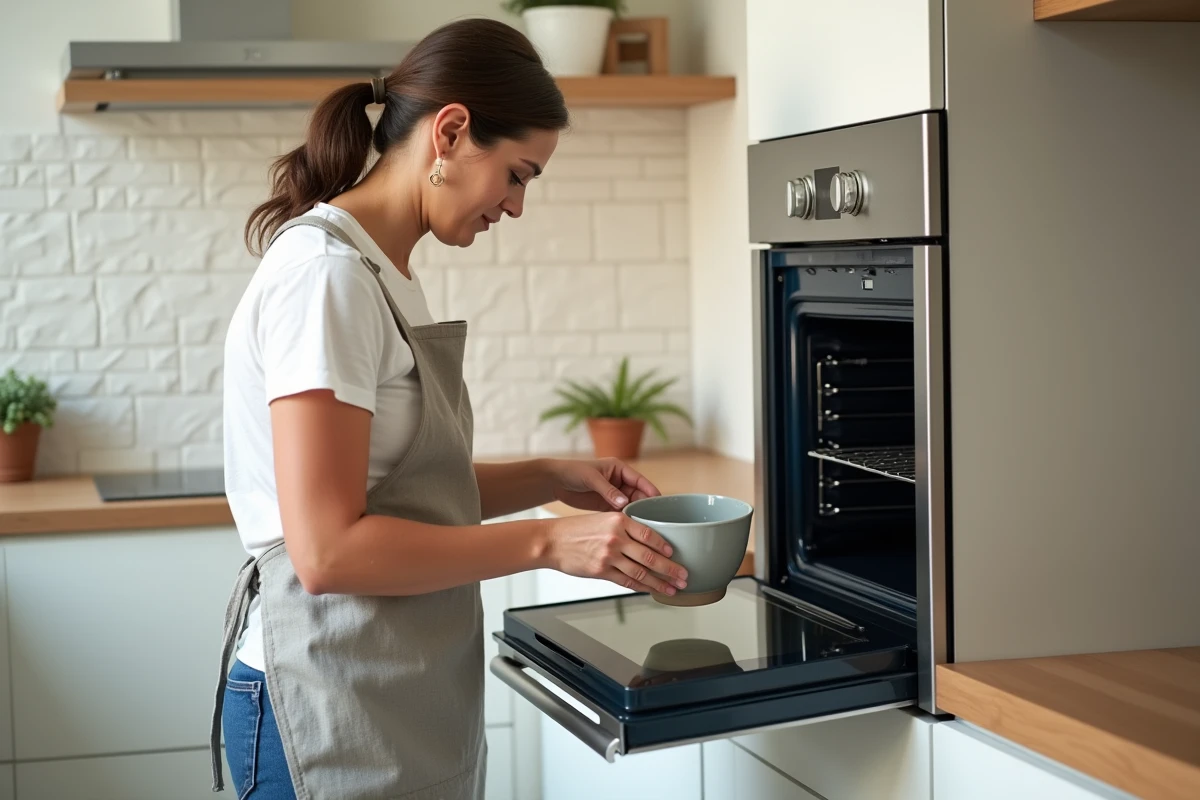
A steam oven generates pressurized steam in a closed chamber, using either an integrated reservoir or a dedicated generator. A traditional oven, on the other hand, heats the air through natural or forced convection, without any humidification device. Therefore, reproducing a true steam environment in a conventional oven remains an approximation, not a complete conversion.
Technical Limitations of a Conventional Oven Compared to Steam Cooking
Before attempting to produce steam in a traditional oven, it is essential to understand what physically separates the two appliances. A steam oven continuously controls the humidity level by injecting a precise amount of steam at a regulated temperature. A conventional oven lacks humidity sensors, water circuits, and sufficient sealing to retain steam in the chamber.
The interior enamel of a traditional oven is not designed to withstand repeated high-temperature water splashes. Pouring cold water onto a hot baking surface causes thermal shock that can eventually crack the enamel or damage the lower heating elements.
The door of a conventional oven allows some steam to escape through its seals, which are not designed to retain moisture. The result: the steam effect remains partial and temporary, limited to the first few minutes of cooking. For those looking to transform a traditional oven into a steam oven, this distinction between occasional humidification and true steam cooking is key to not overestimating the results.
Concrete Methods to Create Steam in a Conventional Oven
Several techniques allow for the introduction of humidity into the chamber of a conventional oven. None replicate the consistency of a dedicated steam oven, but some yield very good results for bread, pie crusts, or meats.
The Hot Water Container on the Baking Surface
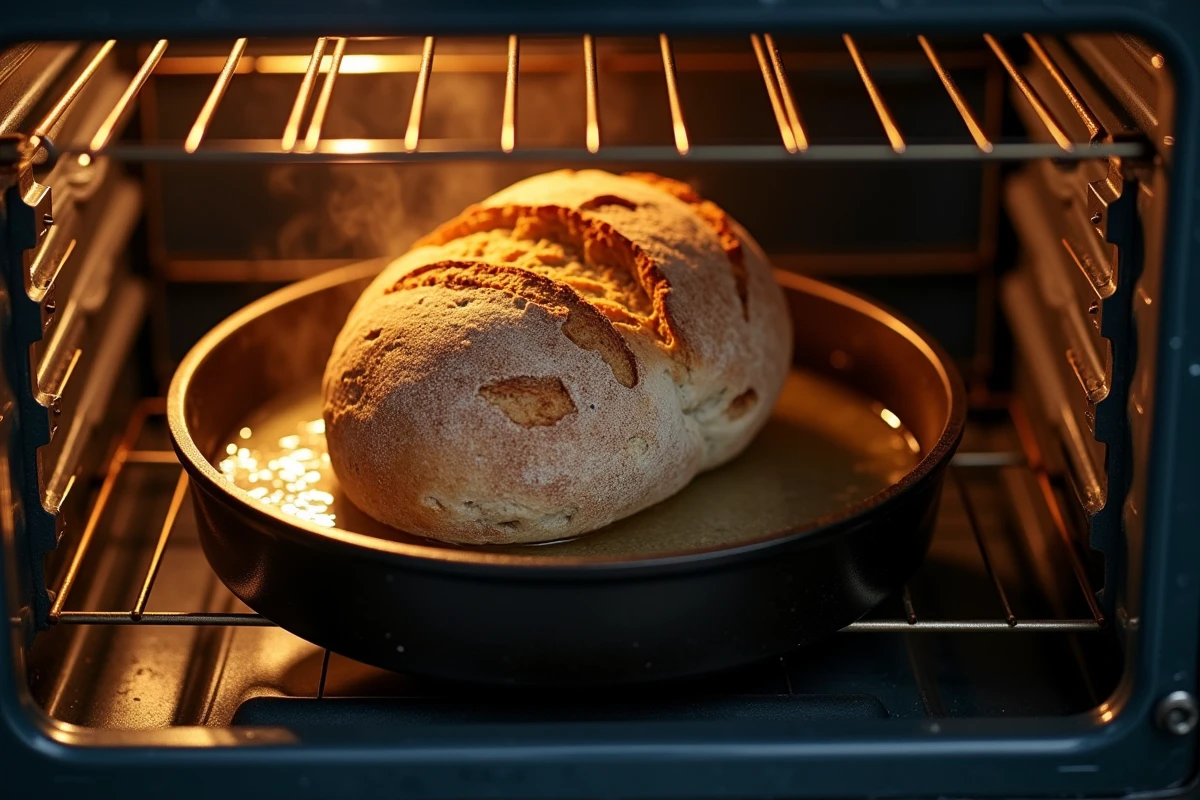
The most common method involves placing a heat-resistant dish (cast iron, thick stainless steel) filled with boiling water on the bottom rack or directly on the baking surface, starting from preheating. The water gradually evaporates and saturates the air during the first few minutes.
The pitfall: using a glass or fine ceramic dish, which may shatter under thermal shock. Prefer cast iron or thick stainless steel, and always pour in already hot water, never cold.
Throwing Ice Cubes on a Hot Baking Sheet
Some amateur bakers throw a handful of ice cubes onto a preheated cast iron baking sheet at the moment of baking. The sudden contact generates an intense but very brief release of steam. This technique works well for bread, where the steam burst in the first ten minutes is sufficient to create a fine, shiny crust.
The main risk concerns the heating elements: if ice cubes come into direct contact with a heating element, the thermal shock can weaken them. Aim for the baking sheet, not the bare bottom of the oven.
The Stainless Steel Oven Humidifier
Specific accessories exist to avoid risky makeshift solutions. For example, Mathon sells a stainless steel oven humidifier designed to distribute steam more evenly. This type of accessory is filled with water and placed in the oven during cooking. The intended use covers bread, pie crusts, and cooking that requires a more humid environment.
Manual Spraying
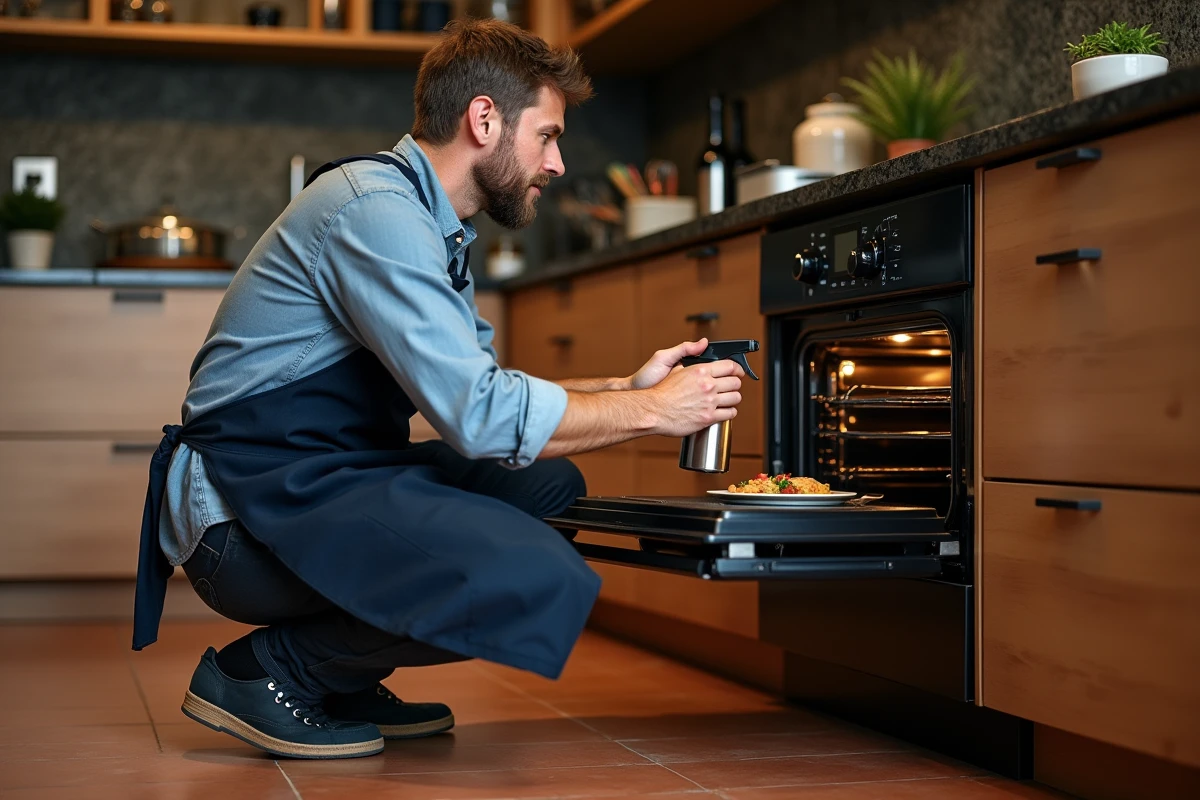
A spray bottle filled with water allows for a fine mist to be projected onto the oven walls just after placing the food inside. The method is simple but involves opening the door, which drops the temperature and releases the accumulated steam. Two or three quick sprays remain effective if done within the first thirty seconds.
Which Dishes Really Benefit from Steam in a Conventional Oven
Occasional humidification in a traditional oven does not replace 100% steam cooking (vegetables, fish at low temperatures). However, it significantly improves results for mixed cooking where dry heat predominates but where an initial input of humidity alters the final texture.
- Artisan bread: steam during the first ten minutes promotes volume development (the “oven spring”) and gives a fine, crispy, and golden crust instead of a dull and thick surface.
- Pie crusts: a slightly humid environment at the beginning of cooking prevents the dough from drying out too quickly and limits bubbles under the crust.
- Roasted meats: a few minutes of steam at the beginning of cooking help keep the juices on the surface before the Maillard reaction takes over. The meat remains juicier inside.
- Brioche and pastries: humidity delays crust formation, allowing the dough more time to rise before setting.
Protecting Your Oven: Precautions to Avoid Damage
Reproducing a steam effect in an oven not designed for it carries real risks if basic precautions are ignored. The first rule is to never pour water directly onto the heating elements or onto the bare enamel of the baking surface.
- Always place a heat-resistant container (cast iron, thick stainless steel) between the water and the oven walls.
- Avoid prolonged steam cooking (beyond fifteen minutes of injection): persistent humidity accelerates corrosion of internal metal parts and can cause rust on the racks.
- Dry the oven with the door open after each use with steam, to prevent residual moisture from stagnating in the cavity.
- Regularly check the condition of the interior enamel: micro-cracks facilitate water infiltration under the protective layer, which accelerates degradation.
Regular cleaning after improvised steam cooking sessions extends the oven’s lifespan. The accumulation of limescale from tap water evaporation can also clog the walls, especially in areas with hard water.
A traditional oven can produce a temporary steam effect sufficient for bread and pastries, as long as it stays within the limits of its design. For complete steam cooking (crisp vegetables, low-temperature fish, precise humidity control), only a steam oven or a steam-combined oven offers the necessary consistency and safety. The transformation remains partial, and it is precisely by accepting this limit that one can make the most of it.