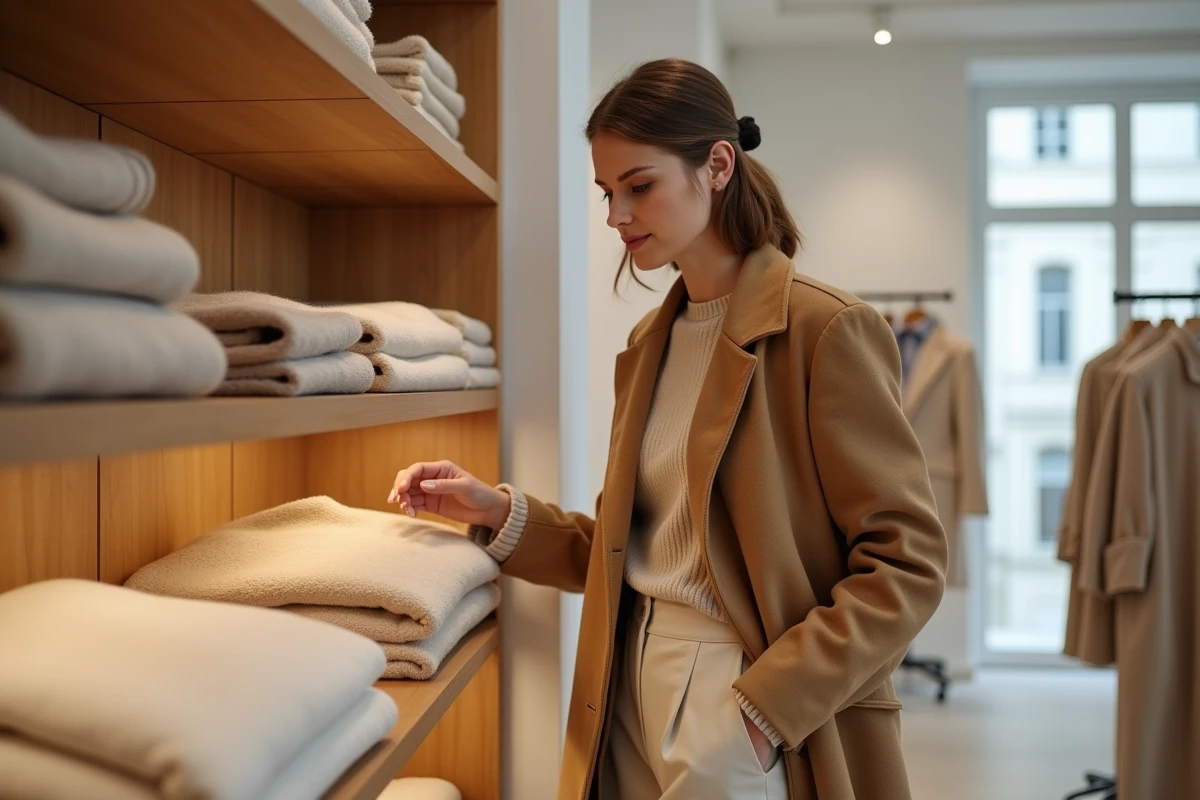
The term “trendy shopping” refers to a purchasing approach focused on pieces that reflect current style directions, without being limited to major brands or traditional channels. This approach combines the search for uniqueness, attention to materials, and the desire to build a coherent wardrobe rather than an accumulation of clothes worn for just one season.
Shopping selection and textile quality criteria
Before browsing online catalogs or stepping into a store, it is useful to know what distinguishes a well-made item from a product that is merely “in fashion.” Textile quality relies on a few technical parameters that can be checked personally.
The fabric weight, expressed in grams per square meter, provides an initial indication of density and durability over time. A cotton jersey intended for a t-shirt will be more durable if it has a sufficiently dense weight to avoid transparency after washing. The finishes can be checked at the seams: regular topstitching, clean edges, and reinforced buttonholes indicate careful assembly.
The composition also plays a direct role in comfort and maintenance. A cotton-linen blend breathes better in summer than 100% polyester, while merino wool retains its shape longer than low-quality acrylic. These technical details allow for a quick sorting of items that deserve attention from those that won’t last two seasons.
For those who wish to access shopping at Le Comptoir de Violette, the approach is precisely to offer selected pieces based on these material and manufacturing criteria.
Responsible fashion and second-hand: a reflex that changes selection
In recent years, French lifestyle media have integrated vintage and second-hand into their shopping selections alongside new collections. Stores like Le Bon Marché and Galeries Lafayette now offer dedicated corners for second-hand pieces, and specialized platforms have made this market accessible on a large scale.
This movement is not just a passing trend. The European Action Plan for the Circular Economy is pushing brands to rethink the sustainability of their products. In concrete terms, this translates into increasing obligations regarding environmental labeling and traceability of raw materials.
What this changes for the buyer
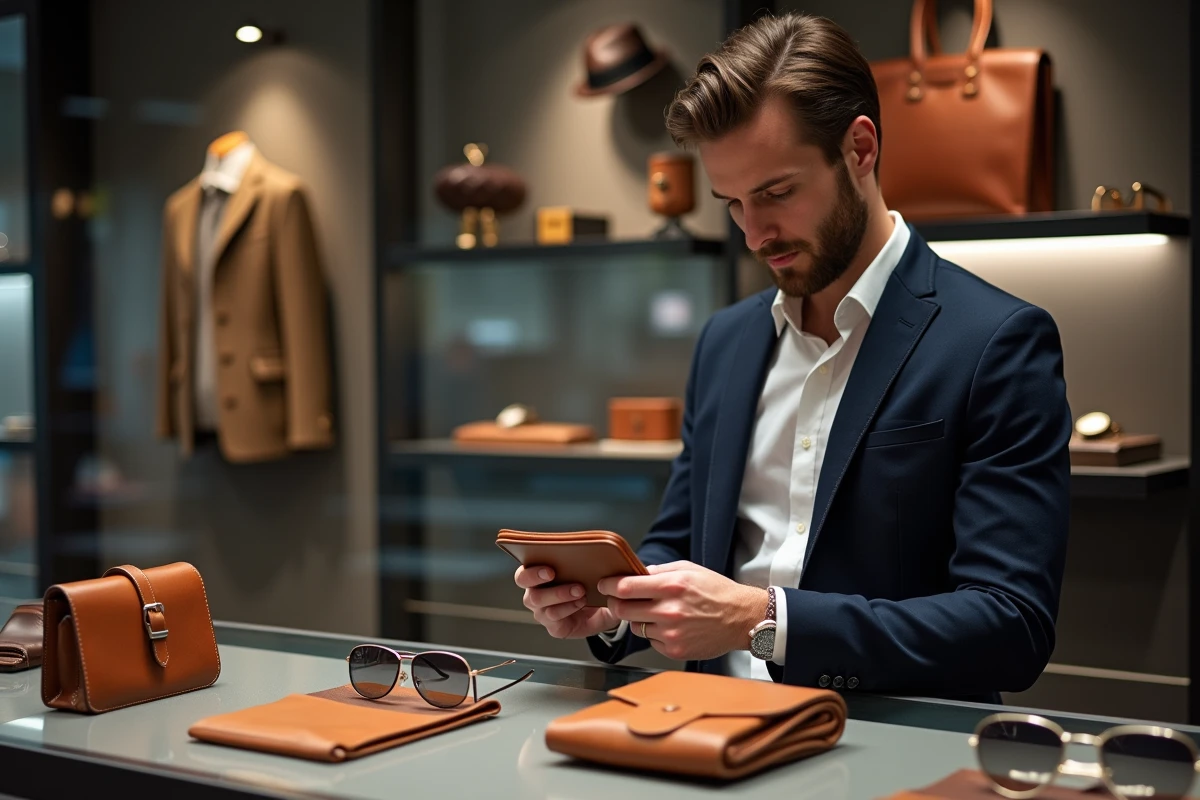
A second-hand item in good condition, from a brand known for the quality of its textiles, can offer a better value for money than a new entry-level piece. The price does not always reflect the actual value of a garment: a thick wool jacket bought second-hand at a reduced price will often outperform a new model made of synthetic fabric sold at a higher price.
To evaluate a vintage item, three checkpoints are sufficient:
- The condition of the seams and zippers, which reveals the structural wear of the garment beyond its exterior appearance
- The softness of the fabric to the touch, as a stiffened or pilled textile has exceeded its optimal lifespan
- The presence of the composition label, which allows for checking the material and anticipating washing behavior
Personalization and online style recommendations
Major fashion retailers have recently deployed style recommendation tools based on artificial intelligence. These systems analyze purchasing preferences, declared morphology, and browsing history to offer selections tailored to each profile.
Zalando, H&M, and several luxury brands have integrated virtual fitting functions and digital “personal shopper” features. The goal is to replicate online the support found in physical stores, with suggestions for complete outfits rather than isolated items.
Limits and precautions regarding fashion algorithms
These tools remain commercial recommendation systems. They favor high-margin or fast-moving products. An algorithm does not replace the knowledge of one’s own clothing needs.
Before following an automated suggestion, it is more reliable to ask a few simple questions:
- Does this piece pair with at least three items already in the wardrobe, or will it remain isolated?
- Do the fabric and cut correspond to actual use (office, weekend, occasions), or is it an impulse visual purchase?
- Is the asking price consistent with the observed textile quality, compared to similar pieces from other brands?
These personal filters usefully complement algorithmic suggestions and prevent purchases that end up at the back of a closet after a few weeks.
Building a trendy and refined style without overaccumulation
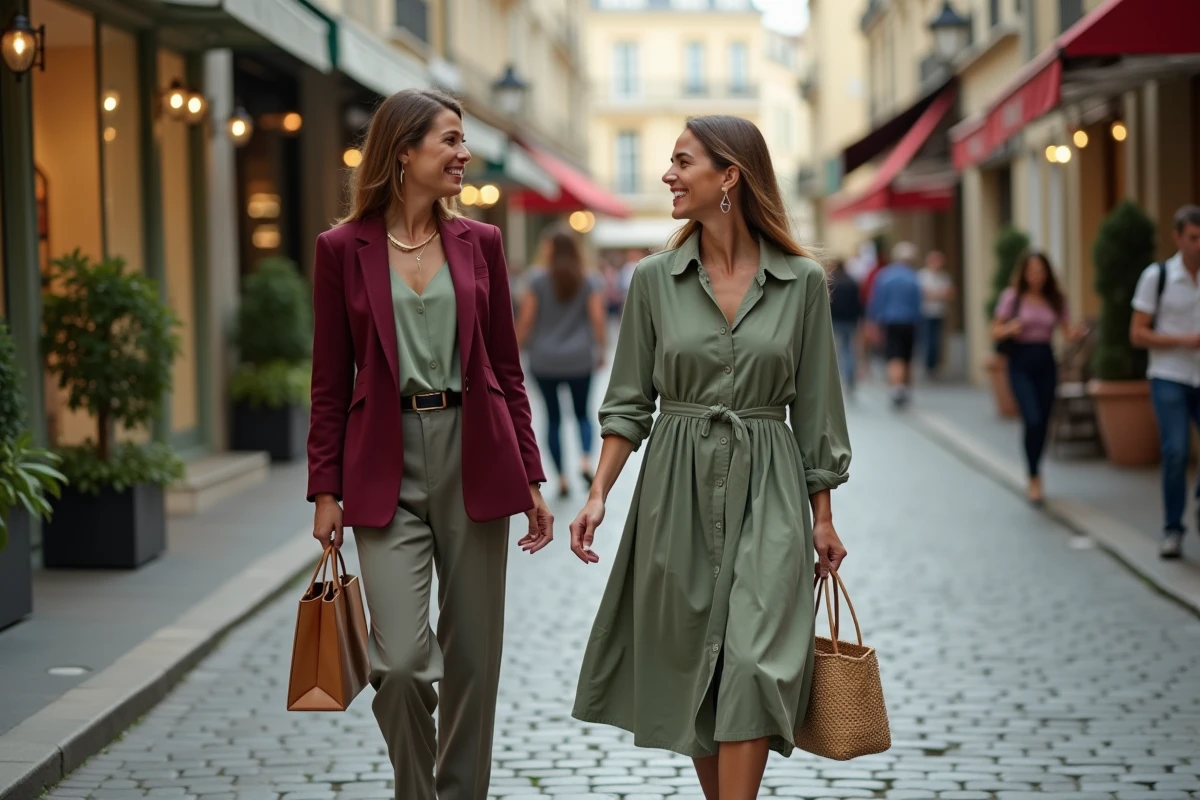
Fashion refinement relies less on the number of pieces than on their coherence. A wardrobe built around a few quality basics paired with standout pieces allows for outfit variation without multiplying purchases.
The basics are neutral pieces in terms of color and cut: well-tailored trousers, a fine knit sweater, a quality cotton shirt. The standout pieces add character: a crafted leather accessory, a sharply tailored jacket, shoes that anchor the style in a specific direction.
Accessories and details: where refinement plays out
In trendy shopping, accessories play a disproportionately large role compared to their cost. A full-grain leather belt, a wool scarf, or a well-proportioned bag transforms a simple outfit into a constructed silhouette. Leather goods, shoes, and jewelry are the three categories where investing in quality is most noticeable and lasts the longest.
Choosing accessories made from natural materials (leather, brass, wood, stones) rather than plastic substitutes ensures a patina that improves over time instead of degrading. It is also a concrete way to reduce the frequency of replacements.
Ultimately, refined shopping rests on a simple principle: buy less, but with better targeting. The selection of trendy items gains relevance when it is based on verifiable textile criteria, attention to production channels, and a clear understanding of one’s own style.